
Thumb

0 repins 0 comments

Thumb

0 repins 0 comments

The "Lazarillo." offers a sound and credible vision of the colonial life between 1771 and 1773, as well as practical details of the trip from Montevideo up to Lima, through Buenos Aires, C rdoba, Salta, Potos, Chuquisaca and Cuzco. According to Jos Luis Busaniche, the argentine born historian, "through its pages flows a new feeling about nature, far apart from the previous letters and documents of the colonial era" Its first edition circulated in a clandestine way in America. The text is the transcription of don Alonso Carri de la Vandera's writings during his royal commission of fixing the postal system between Montevideo and Lima. The author is mentioned as "Don Calixto Bustamante Carlos Inga, also known as 'Concolorcorvo', who went along the commissioner in said journey and wrote the extracts" Calixto Bustamante Carlos Inca existence is proven, as well as documented the commission and trip of "visitador" Carri, however "Concolorcorvo" shows a curiously remarkable erudition for a man of his extraction. According to Bartolom Mitre the book "was written by an erudite person, knowledgeable of the Spanish America customs". Don Alonso Carri de la Vandera spent most of his life in Mexico and Peru, and was in Buenos Aires in 1749. His letters are written in a far from vulgar prose and full of classics quotations. It would not be strange that he had authored "El Lazarillo" himself. There is a letter from Lima addressed to the postal service administrator in Buenos Aires, don Domingo de Basavilbaso, asking him to receive and protect a don Calixto Bustamante Carlos Inca, who was starting his journey to the R o de la Plata. Abandoned and in need due to the death of "his master Se or don Antonio Guill y Gonzaga, President of the Realm of Chile", he wished to change his fortune "because the temperament of Lima had proven contrary to his health". There is no proof of Bustamante's appearance in Buenos Aires, but had it been so he would have stayed at the same time as Carri prepared his trip to Peru. It might have happened that following Basavilbaso's request the visitador found in Concolorcorvo an able secretary and the best travel company. During the trip the visitador writes confidential reports, complaining about those who surreptitiously paralyze his work. Besides him the witty Bustamante suggests invectives y scathing jokes. The visitador might have been aware of the perils involved in signing such writings. And Bustamante, who admired the visitador, might have taken care, with or without permission, to see that the events did not go unpublished. Thus could have been the "El Lazarillo" conceived: a mixture of travel book, official reports and strong sarcasm. A most simple and possible explanation that in no way diminishes a bit its amusing quality.

Thumb

0 repins 0 comments

Thumb

0 repins 0 comments

Thumb

0 repins 0 comments

Thumb

0 repins 0 comments

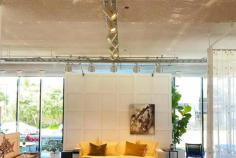
What goes into a home? For Karim Rashid, the dynamic young product and interior design guru, a living room is accented with a combustible mixture of hot pinks and iridescent orange. The Connecticut home of David Easton, one of the reigning kings of traditional design, features a vast central space overlooking a classically proportioned garden. Holly Hunt, the hip young West Coast designer, has married an American sensibility with French country charm in her Parisian apartment. All of these homes are distinctive, and all show remarkable taste, which is hardly surprising given that their owners have the sharpest eyes in the Western Hemisphere. The 20 designers featured in American Designers' Houses consider their homes part laboratory, part showroom-and entirely personal. In interviews that are akin to guided tours, the designers point out favorite objects, reminisce about their work and clients, and share design tips. By focusing on interior designers' own homes, this fascinating book captures their style in its purest and most personal expression, uncompromised by clients' demands, and will encourage readers to develop their own unique decorating style. Author Bio: Dominic Bradbury is a journalist who has contributed to House & Garden, Elle Decor, GQ, and other magazines. He has written a number of books on architecture and design, including Designers at Home. Mark Luscombe-Whyte's photographs of interiors have been published in Vogue, House & Garden, Condé Nast Traveler, and other magazines.

Thumb

0 repins 0 comments

Thumb

0 repins 0 comments

Next Page